08-07-2026, 03:57 PM
Hi all,
A couple of year's back I was given a pair of Microbees by a former workmate, who'd used them for his electrical engineering degree back in the late 1980s and early 1990s. "Pair" is being generous - more like 1.75 units, as you'll soon understand why. Anyhoo, they've sat waiting patiently since then as I finished up my own electrical engineering degree (now complete, thankfully) and I now have some spare time to start the restoration process.
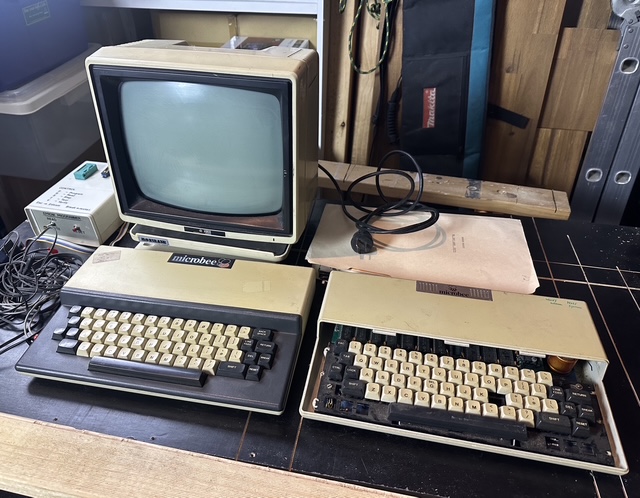
I'm hoping to use this thread to gather information for how to approach a careful and considered restoration, to get at least the better of the two machines up and running reliably and keep it that way, one that won't unduly risk a system which by all accounts is getting harder to find. I'm reasonably confident and capable with basic electronics, soldering and troubleshooting (a child of Dick Smith's Funway Into Electronics) with mostly audio amps and the like (solid state and valve) but haven't had a lot of experience with serious board-level restoration of computer hardware or digital systems, old or new. The lack of SMD in Microbees is reassuring, to say the least. I've spent many hours watching the likes of Colin @ ThisDoesNotCompute and various others go through the process on various systems, so have a rough idea of what I'm in for.
Along with the "two" systems I've also been given a period-correct (though non-Microbee-branded) Kaga 12" green monochrome monitor, one and a half power supplies (2 harnesses, 1 transformer), a completed EPROM reader/writer kit and a nice bundle of documentation.
At this stage I've resisted any urge to apply power to anything "just to see", lest I make it worse ;-)
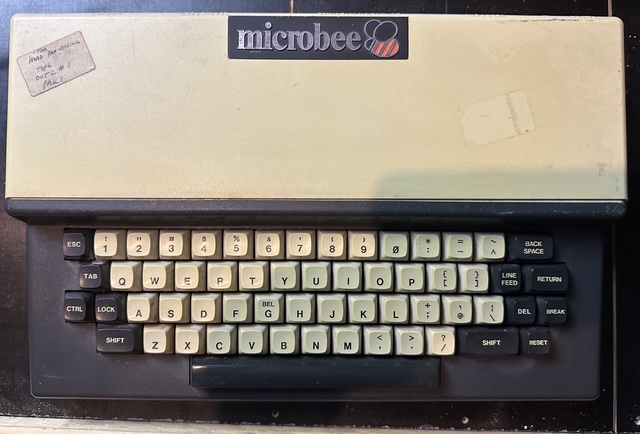
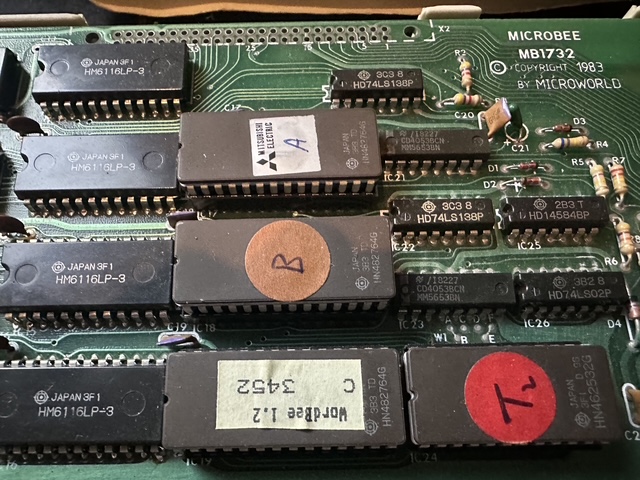
Both systems have 'Model II' on the case. The first system appears intact and unmolested, just a bit dirty and yellowed as you'd expect, shows MB1732-33 ©1983 on the core board and from what I can tell has a full complement of ROMs, and no expansion slot soldered in. From what I can gather from the Wiki, this is a standard 32Kb Series 3 based on the case badging?
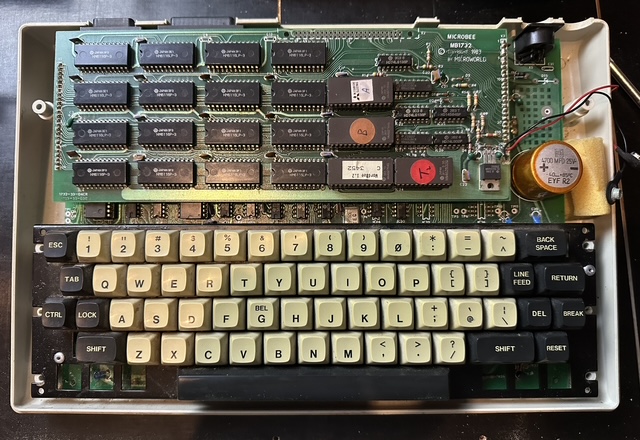
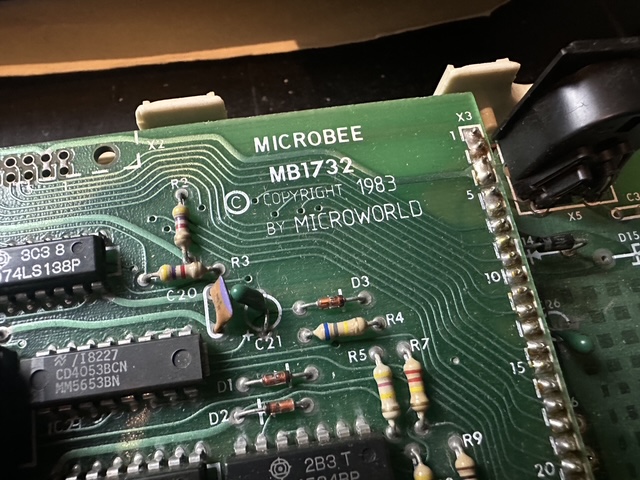
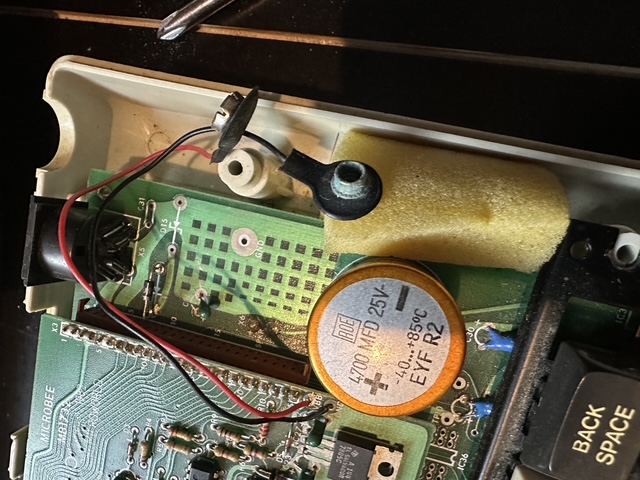
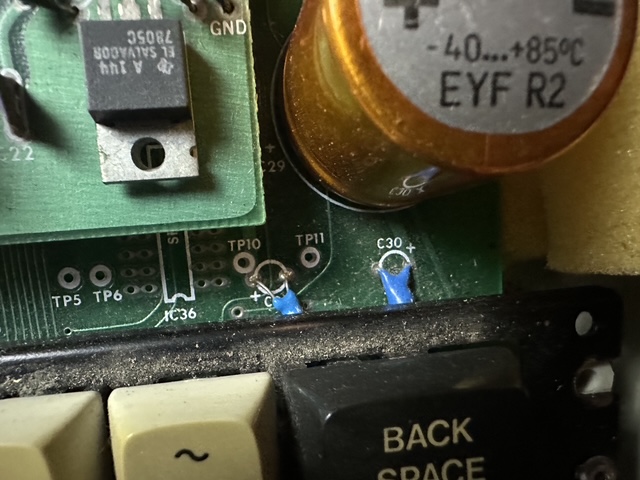
The only damage I can see is a broken 9V battery clip lead. The big 4700uF cap is the only electrolytic I'm seeing; no doubt it'll need replacement however it doesn't appear to have caused any corrosion nearby. Looks like the rest of the board is ceramics/tantalums only, bless whomever did the original design and BOM ;-)
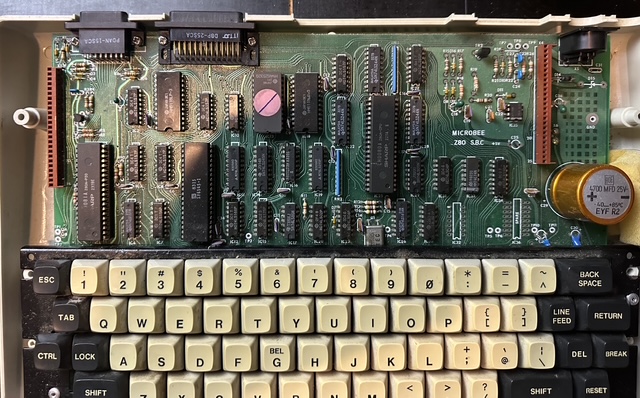
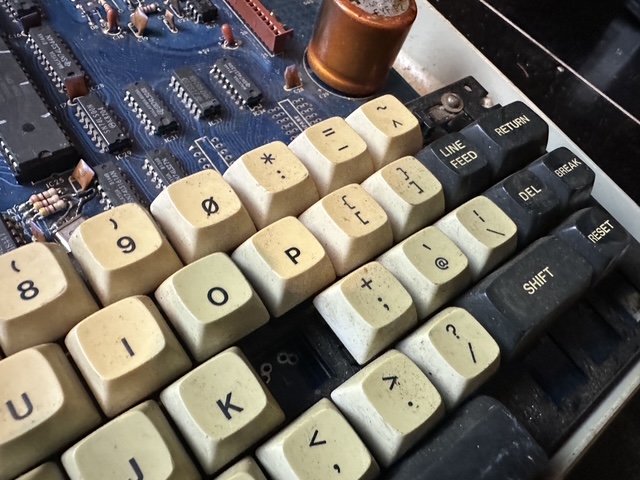
Keyboard is an unknown quantity at this stage, by the sounds of things replacement is likely, but all the key caps are in place at least and they're not too gungy.
The other system is, umm... well, let's say, it's seen some things ;-)
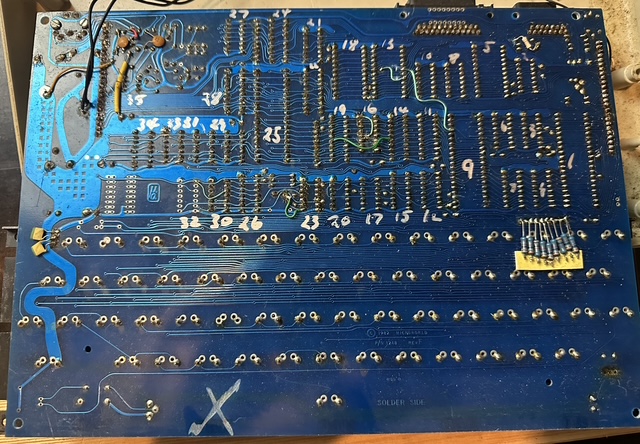
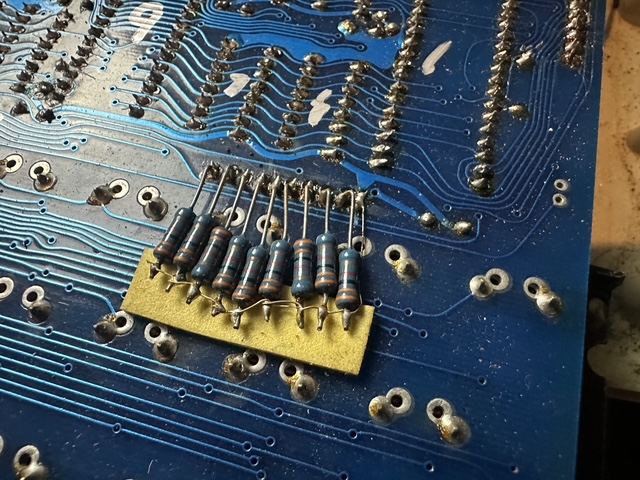
Both Core and Main boards show plenty of modification and damage (bent pins etc). Exactly what's going on here is beyond my current knowledge... doesn't seem like factory modification/upgrades, more the efforts of a well meaning psychopath with a soldering iron. This was evidently the unit that was used with the EPROM reader, whether the modifications were required to support that peripheral, maybe?
Based on the "vented" top case logo it's apparently a PC85, 64K CIAB or SBC. A sticker on the missing keyboard surround might help. Board codes are PN1632 RevD for the Core and PN1248 for the Main which I'm reading the Wiki correctly indicate an earlier standard model though? Suspect this system might have started life as a bit of a bitsa, and was subsequently abused accordingly.
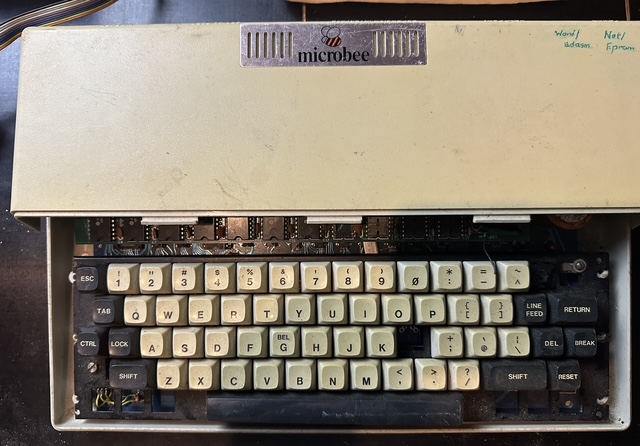
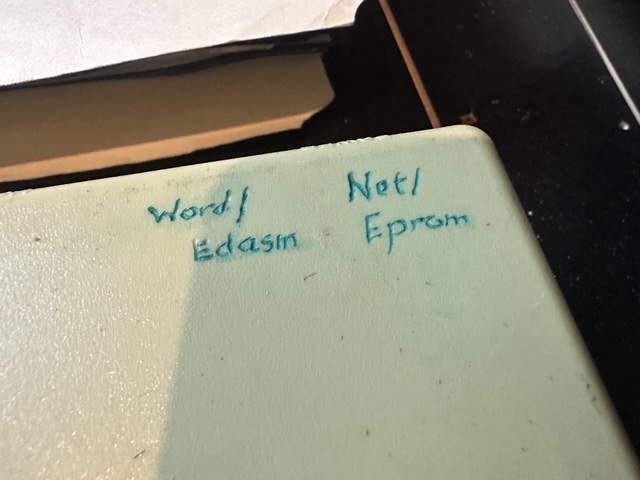
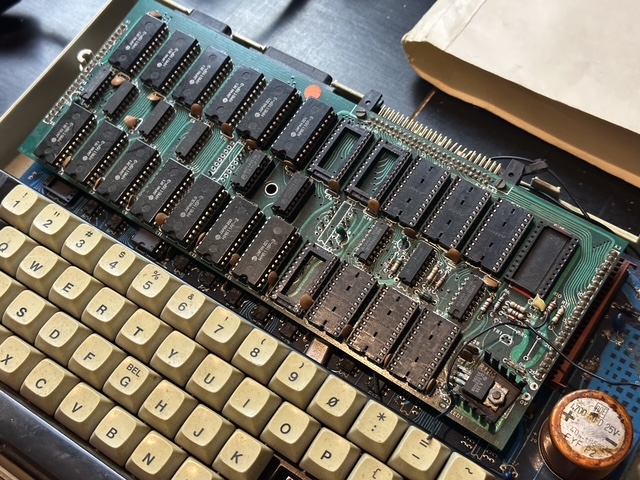
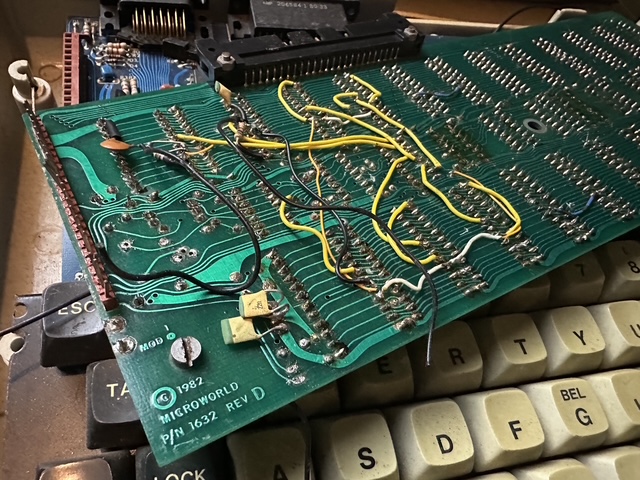
Suffice to say it's a mess and quite possibly beyond repair - certainly not without a tonne of work. A number of components seem to be damaged and just getting the Core board to mount would require a plenty of time with a pair of pliers to straighten the interface pins. The board appears to have a decent wad of RAM installed but is missing ROMs? Keyboard is down a few keys too. Likely only good for parts, but we'll get the other unit working first then decide if there's anything that can be done for this one.
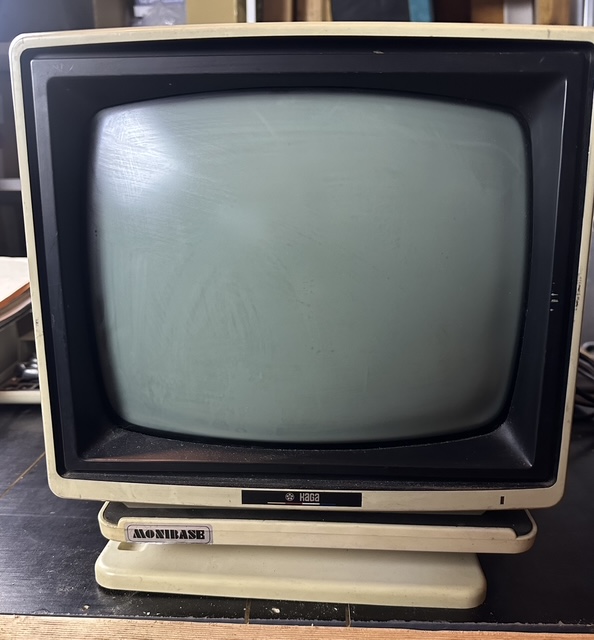
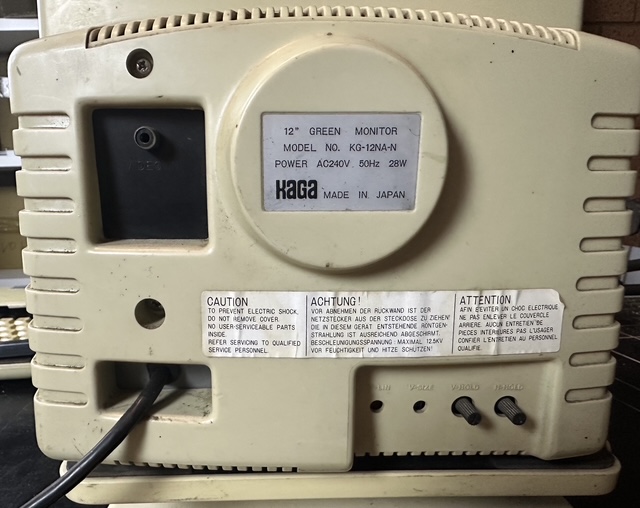
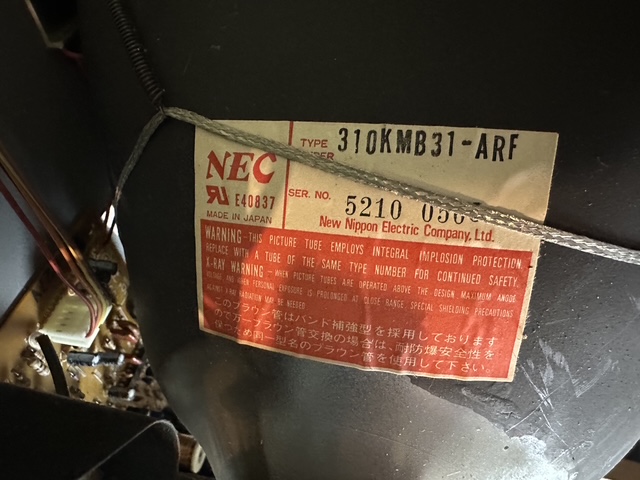
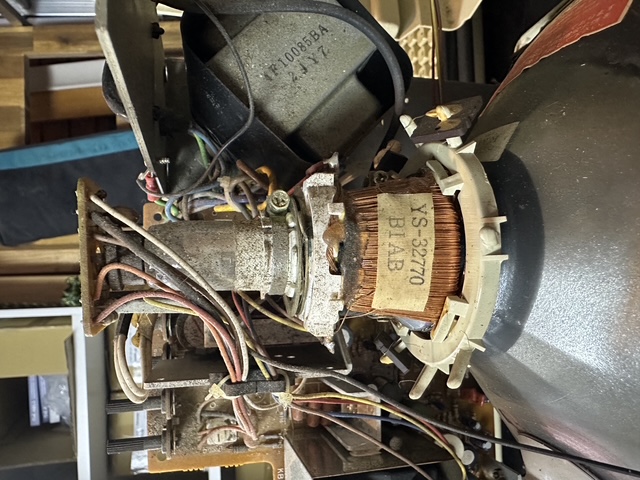
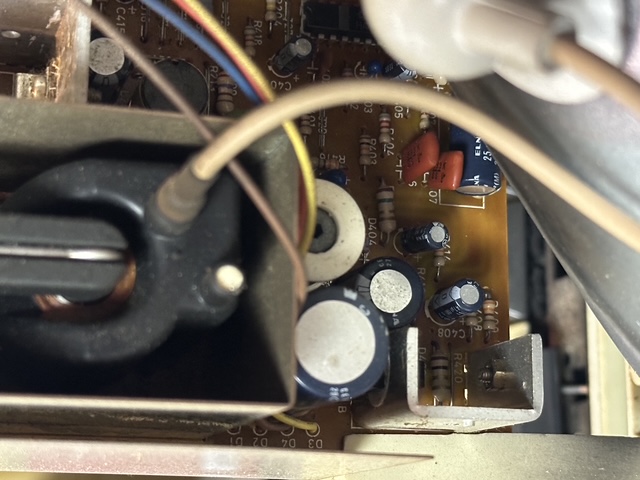
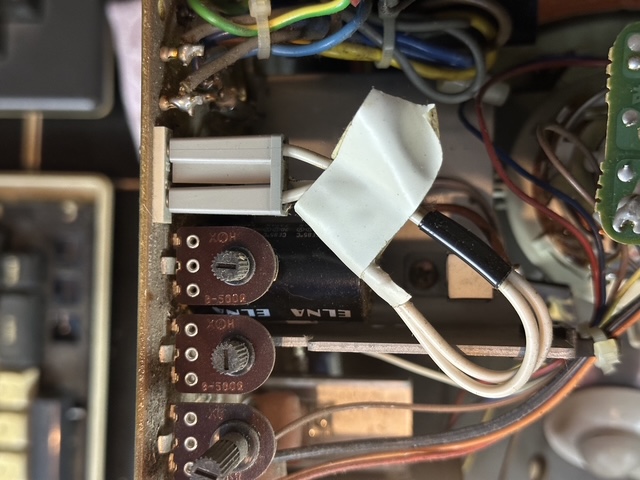
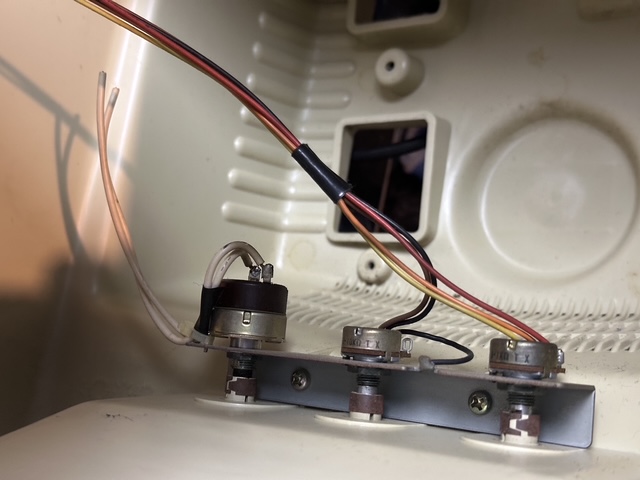
The monitor is a Kaga KG-12NA-N. I've managed to find some resources online including a good general reconditioning video including recapping and cleaning out the V/H-HOLD pots. Other than being very dusty internally, it seems fine with no visible burn-in, though someone appears to have bypassed the Power On/Off switch for, uh, some reason. I think a careful cleaning and possibly some recapping will have it running without too much drama.
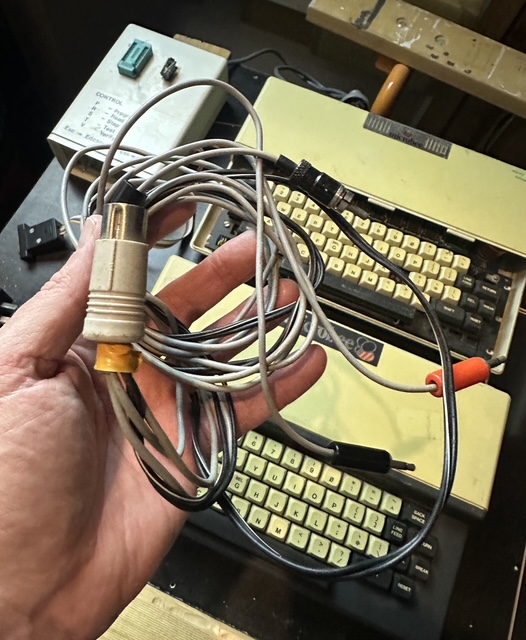
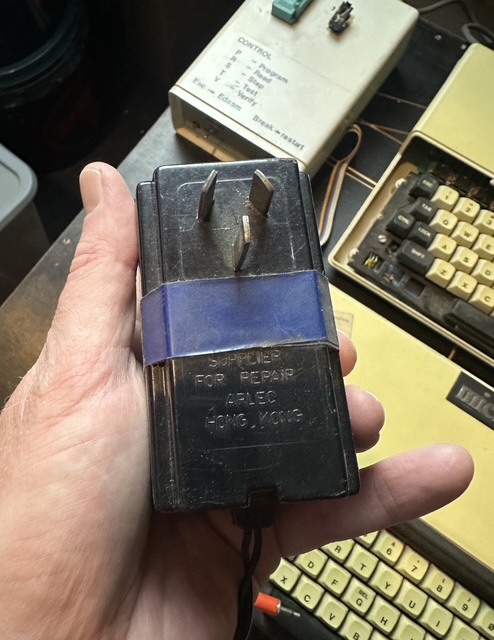
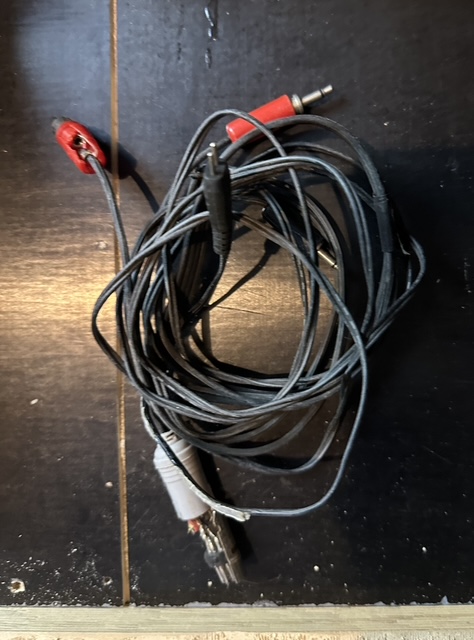
The power supply transformer and associated cabling do not inspire confidence. When I get a free moment I'll do some quick tests with a multimeter to check output and continuity, but honestly I'm inclined to just give Ewan some money and get a whole new supply and cable kit when they become available.
So with all that, I'm curious as to what's considered the best plan of attack by the community for restoring old Bees? As it stands, my general plan with the 'good' unit is:
Any other suggestions?
Also, I'm guessing a Gotek is the preferred/least complicated way to get programs and data in and out of the Microbee in this day and age? I do have a potentially usable cassette unit (great big Sony unit used for controlling slide projectors) but honestly cassette-based data storage is something I genuinely hated in the 1980s and early 1990s and have zero nostalgia for ;-)
Many thanks if you've read this far - looking forward to people's suggestions and wisdom!
Cheers, Ben.
A couple of year's back I was given a pair of Microbees by a former workmate, who'd used them for his electrical engineering degree back in the late 1980s and early 1990s. "Pair" is being generous - more like 1.75 units, as you'll soon understand why. Anyhoo, they've sat waiting patiently since then as I finished up my own electrical engineering degree (now complete, thankfully) and I now have some spare time to start the restoration process.
I'm hoping to use this thread to gather information for how to approach a careful and considered restoration, to get at least the better of the two machines up and running reliably and keep it that way, one that won't unduly risk a system which by all accounts is getting harder to find. I'm reasonably confident and capable with basic electronics, soldering and troubleshooting (a child of Dick Smith's Funway Into Electronics) with mostly audio amps and the like (solid state and valve) but haven't had a lot of experience with serious board-level restoration of computer hardware or digital systems, old or new. The lack of SMD in Microbees is reassuring, to say the least. I've spent many hours watching the likes of Colin @ ThisDoesNotCompute and various others go through the process on various systems, so have a rough idea of what I'm in for.
Along with the "two" systems I've also been given a period-correct (though non-Microbee-branded) Kaga 12" green monochrome monitor, one and a half power supplies (2 harnesses, 1 transformer), a completed EPROM reader/writer kit and a nice bundle of documentation.
At this stage I've resisted any urge to apply power to anything "just to see", lest I make it worse ;-)
Both systems have 'Model II' on the case. The first system appears intact and unmolested, just a bit dirty and yellowed as you'd expect, shows MB1732-33 ©1983 on the core board and from what I can tell has a full complement of ROMs, and no expansion slot soldered in. From what I can gather from the Wiki, this is a standard 32Kb Series 3 based on the case badging?
The only damage I can see is a broken 9V battery clip lead. The big 4700uF cap is the only electrolytic I'm seeing; no doubt it'll need replacement however it doesn't appear to have caused any corrosion nearby. Looks like the rest of the board is ceramics/tantalums only, bless whomever did the original design and BOM ;-)
Keyboard is an unknown quantity at this stage, by the sounds of things replacement is likely, but all the key caps are in place at least and they're not too gungy.
The other system is, umm... well, let's say, it's seen some things ;-)
Both Core and Main boards show plenty of modification and damage (bent pins etc). Exactly what's going on here is beyond my current knowledge... doesn't seem like factory modification/upgrades, more the efforts of a well meaning psychopath with a soldering iron. This was evidently the unit that was used with the EPROM reader, whether the modifications were required to support that peripheral, maybe?
Based on the "vented" top case logo it's apparently a PC85, 64K CIAB or SBC. A sticker on the missing keyboard surround might help. Board codes are PN1632 RevD for the Core and PN1248 for the Main which I'm reading the Wiki correctly indicate an earlier standard model though? Suspect this system might have started life as a bit of a bitsa, and was subsequently abused accordingly.
Suffice to say it's a mess and quite possibly beyond repair - certainly not without a tonne of work. A number of components seem to be damaged and just getting the Core board to mount would require a plenty of time with a pair of pliers to straighten the interface pins. The board appears to have a decent wad of RAM installed but is missing ROMs? Keyboard is down a few keys too. Likely only good for parts, but we'll get the other unit working first then decide if there's anything that can be done for this one.
The monitor is a Kaga KG-12NA-N. I've managed to find some resources online including a good general reconditioning video including recapping and cleaning out the V/H-HOLD pots. Other than being very dusty internally, it seems fine with no visible burn-in, though someone appears to have bypassed the Power On/Off switch for, uh, some reason. I think a careful cleaning and possibly some recapping will have it running without too much drama.
The power supply transformer and associated cabling do not inspire confidence. When I get a free moment I'll do some quick tests with a multimeter to check output and continuity, but honestly I'm inclined to just give Ewan some money and get a whole new supply and cable kit when they become available.
So with all that, I'm curious as to what's considered the best plan of attack by the community for restoring old Bees? As it stands, my general plan with the 'good' unit is:
- Take everything apart, at least to a manageable level.
- Give the PC boards a thorough clean with IPA and a soft brush.
- Replace and resolder the broken 9V battery clip.
- Sort out a dependable power supply and cable set (new or clean up existing).
- Give all the plastics etc. a good clean. (Not interested in retrobrighting.)
- Give the monitor internals a thorough clean, attempt power up, recap as necessary.
- Power up and take it from there. Sounds like keyboard issues are a near-given.
Any other suggestions?
Also, I'm guessing a Gotek is the preferred/least complicated way to get programs and data in and out of the Microbee in this day and age? I do have a potentially usable cassette unit (great big Sony unit used for controlling slide projectors) but honestly cassette-based data storage is something I genuinely hated in the 1980s and early 1990s and have zero nostalgia for ;-)
Many thanks if you've read this far - looking forward to people's suggestions and wisdom!
Cheers, Ben.