All content © 2011 - 2025 Microbee Technology Pty Ltd. ‘Microbee’ and the Bee Logo device are registered trade marks.
All cbee Technology Pty Ltd.
‘Microbee’ and the Bee Logo device are registered trade marks.
History / About Us
Before Microbee : The foundation of microbee was laid by an electronic components outlet Applied technology Pty Ltd who developed kit sets for the electronics enthusiasts market. It was suggested to Applied Technology at the time that a compact, easy to use computer was required for use in schools. Codenamed 'Edcom' the original microbee kit computer had its core design based on Z80 S-100 systems that had been developed and a video circuit designed (once again as a S-100 card) by David Griffiths. The name 'Microbee' came into being after a visit to the N.S.W. eduction department by Owen Hill & Matthew Starr who decided that the education computer needed a name that would not only be easy to remember, but something that would also seem friendly within the school environment. The beginning : The microbee came out as a kit computer with the option to have the kit sets built & tested for an extra amount. Due to the large demand for pre-assembled kits & the microbee winning the N.S.W. education computer contract (along with Apple), Microbees started rolling out of the factory fully assembled & tested. A new case was introduced and the microbee came out with the [previously] optional parallel port & a speed upgrade from 2Mhz to 3.375Mhz and full 80 x 24 character mode support. Very soon afterwards a 56k CP/M disk based machine was released. Public Listing : The microbee computer was experiencing fantastic support in the marketplace and going through a rapid growth phase as a result. New models were being released constantly and the number of staff & outlets had grown. To continue the growth of the business & enable more research & development, it was decided that a change of name was appropriate and to list on the ASX as Microbee Systems Ltd (ASX: MSL). Funding from the listing enabled the company to pursue markets overseas (Sweden, Denmark and as far away as Russia) and also to launch new R & D projects - the 'Gamma' & 'Delta', both ambitious projects that included brand new casing designs. The 'Gamma' was hoped to be microbee's competitor to the fast approaching wave of IBM compatible PCs and also machines like the Commodore Amiga. Neither of the projects made it to production, although the casing for the 'Delta' was then used in subsequent machines such as the Teleterm, 256TC and later, the Matilda. It has been said that the R & D costs that mounted up through the development of the Gamma killed the company, and certainly that did play its part, but there were other reasons as well that contributed that are often seen in companies that experience such rapid (rampant?) growth. Takeovers : In 1989, after a 2 takesovers and a restructure, Microbee was once again making steps forward and designing new product. This time, a PC/XT clone (the ‘Matilda) with an included Z80 for backwards compatibility seemed to be the way to tackle the PC market, offering schools an easy path to upgrade to MS-DOS systems but still be able to use their large base of Microbee Z80 software. However, due to a long development time & technical issues it was not enough to sustain sales. Microbee’s doors closed and the remaining stock and other assets were put into storage sometime in 1992. The New Microbee ( 2011 - Microbee Technology Pty Ltd ) : I am delighted to be able to re-launch the famous Microbee brand. Having first been an enthusiast & later working for the original company in sales, service and R & D, Microbee has been a large part of my life. Like so many others, the microbee computer helped launch my I.T. and electronics career. With the full encouragement & support of the previous owners, the microbee name lives once again as Microbee Technology Pty Ltd, a wholely Australian & privately owned entity. Our focus is on electronics technology - old and new. Offering retro-tech for enthusiasts, design services for new product development, and continuing to expand and invest in our manufacturing services. Welcome to Microbee Technology. Ewan J. Wordsworth Director.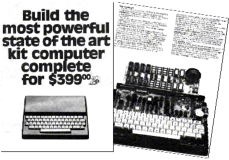


Microbee Technology - Australia’s Premier Computing, Electronics Design & Assembly services company.

Microbee Technology - Australia’s Premier Computing,
Electronics Design & Assembly services company.
All content © 2011 - 2025 Microbee Technology Pty Ltd.
‘Microbee’ and the Bee Logo device are registered trade marks.
